Leading circular change
Transitioning to a circular economy is not only about shifting business models or product designs. It is about changing mindsets and behaviours in your whole value chain in order to ultimately change the entire economic system. How can you be a leader of that change?
It is a daunting task, but it can happen faster than you first might think. Studies show that only 25% of a population need to commit to a new norm to reach a social tipping point where everybody else will eventually follow. In experiments on smaller groups, a single person tipping the minority past that 25% threshold makes all the difference. That can be well worth remembering when trying to achieve change in your team, your company or among your customers.
From Risk Mitigation to Value Creation
If you are familiar with the current state of climate change, biodiversity loss and planetary boundaries, you already understand why our behaviours need changing. We are using up resources and putting stress on our ecosystems at a scale far beyond what nature can handle. We are in a planetary crisis, which in turn leads to social, economic and geopolitical crises. A circular economy would relieve this stress on nature by designing the economic system in a way that we can get our needs fulfilled by using far less natural resources than we do today, and by ending the use of harmful substances and practices.
The linear "take-make-waste" model exposes businesses to volatile commodity prices and supply chain disruptions. In contrast, a circular economy decouples growth from resource consumption. By keeping products and materials in use, companies can reduce costs, foster long-term customer loyalty through service-based models, and tap into the growing "green premium" in the capital markets. We are moving toward an economic system where efficiency and regeneration are the primary drivers of profit.
Being a leader of circular change
Leading circular change is a demanding but crucial role. A change process can invoke feelings of uncertainty, stress and frustration even for someone who is highly motivated. As a leader, your role is to prevent unnecessary stress, listen to and act on feedback and continuously reinforce each individual’s motivation to reach your circular goals.
It can help to reflect on these questions:
Am I, myself, convinced that circular transition is needed?
How do I stay motivated and determined in periods of slow progress?
Do I have the respect and trust needed to get commitment from others?
How can I inspire and motivate others to aspire to a circular future?
What or who could help me strengthen all of these abilities?
Remember that you are not alone. The majority of Nordic businesses have initiated circular change and manufacturing companies globally already see it as a means to increase revenues and resilience. Change is already happening, and by initiating circular change now, your organisation will be well-positioned on the future circular market.
Read our second blog post on leading circular change to understand how you can use the ADKAR model to structuring and managing your circular change process.
Some more inspiration to get your circular change started
Here we have compiled a few sources and an exercise that may give you some inspiration:
WATCH: How to transform apocalypse fatigue into action on global warming. An inspiring and thought-provoking TED Talk by Norwegian psychologist and economist Per Espen Stoknes on how to communicate climate change in a way that makes it relatable, empowering and actionable on a personal level.
LISTEN: Regenerative Economics: New Economic Paradigms, Living Systems, & Holistic Thinking. Episode 149 of The Great Simplification Podcast with economist, investor and author John Fullerton. On how our economic system can be redesigned to fulfill wellbeing needs rather than maximising financial capital growth.
READ: Beyond Sustainability as Usual. An easy-to-read report from EY that explains what the emerging new economy looks like and how businesses can become fit for the new economy, with several case studies of companies that have come far.
DO: Nature Walk for a Circular Vision. This is an exercise that at the same time serves as a light warmup and has a more profound purpose: to remind us that our businesses, economic systems and, ultimately, our lives depend on a healthy planet and functioning ecosystems.
Nature Walk for a Circular Vision
Take a walk in nature or a nature-like area that you can easily access. Stop by some natural item, element or creature that catches your attention. Reflect on and write down: What is this thing? What value does it give to human and planetary health? (What would happen if it didn't exist?) How could your business model and customer offering give value back to this thing? How would you formulate a corporate circular vision that would contribute to this value?
About the authors:
Sofia Sundström and Elin Bergman work at Cradlenet, Sweden’s leading network for accelerating the transition to a circular economy.
Contact:
Sofia Sundström, sofia@cradlenet.se
Elin Bergman, elin@cradlenet.se
Read our next post on how to use ADKAR framework for circular change here.
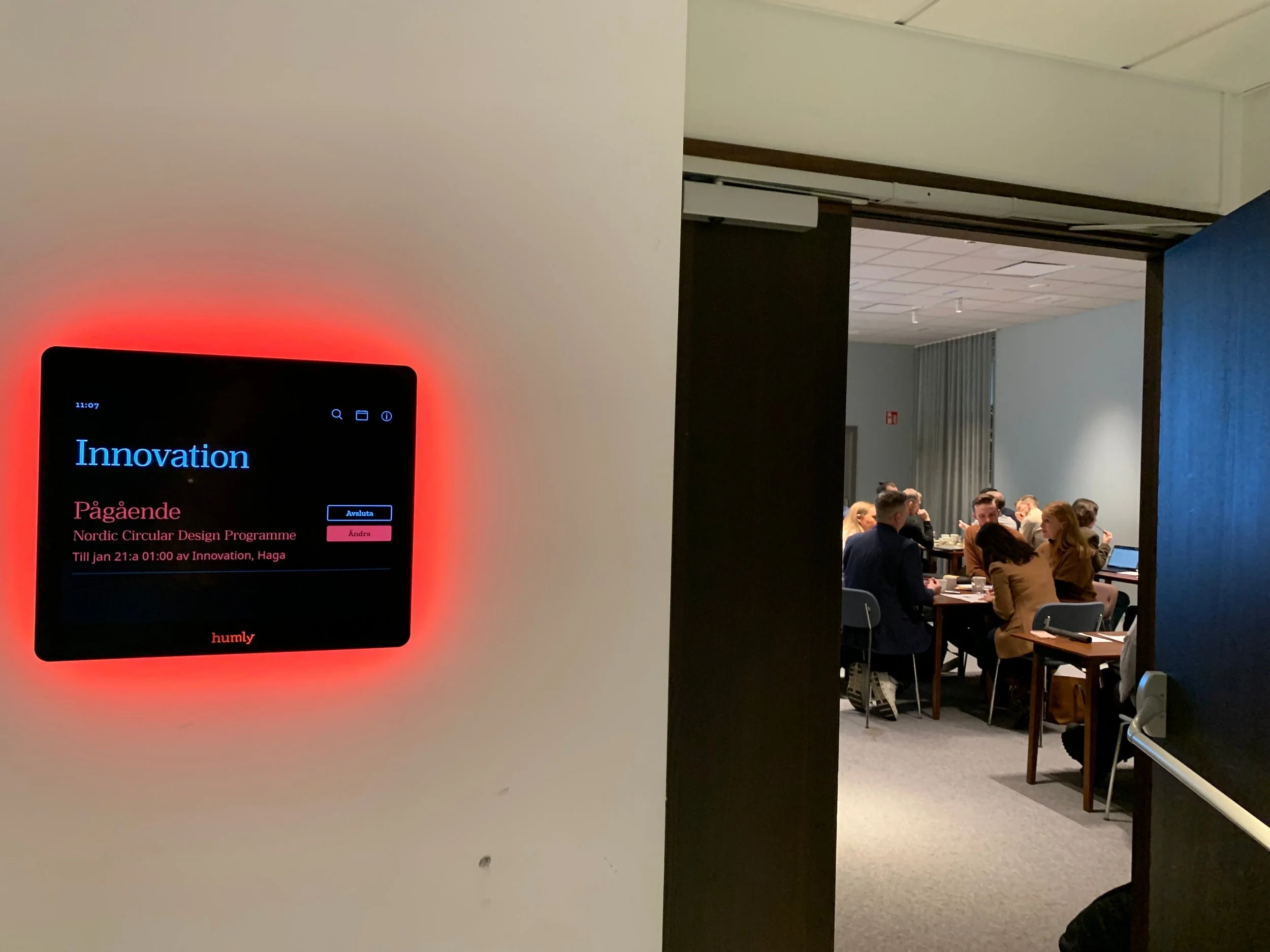
Module 1 live in Stockholm, Feb 10, 2026